


|
315,47 €
incl. 19% VAT incl. Shipping costs
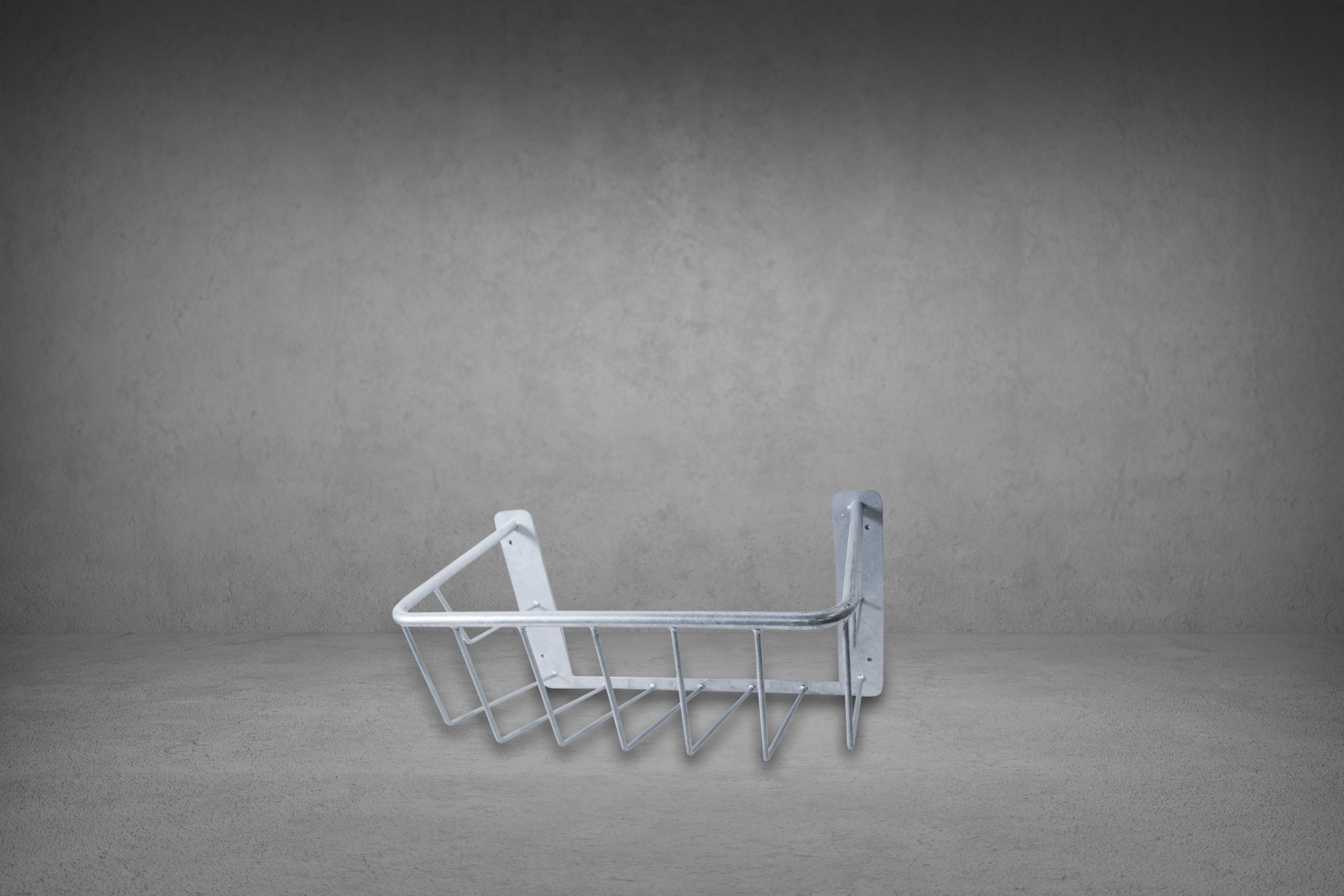
Practical stable hay rack for the stable.
Hay rack - Enables the horse to have constant access to hay A hay rack is an indispensable element of species-appropriate horse husbandry, both in the stable and on the pasture. It provides constant access to hay and ensures a balanced diet. This special hay rack is designed to be mounted on the wall. It is solid, durable and resistant to pressure and bending.
There is a large selection of hay racks for horses, which vary in size, material and design. Here are some common types:
| Feature | details |
|---|---|
| Assembly | Wall mounting |
| Material | Wood, plastic or metal (galvanised) |
A hay rack for horses is suitable for both stables and pastures. We sell a wall-mounted hay rack for horses that encourages the animal to eat in a natural posture and protects the hay from dirt. Hay racks for horses are primarily designed for feeding hay, straw, grass or haylage.
A hay rack is a frame designed to provide horses with roughage in a safe and tidy manner. A hay rack with a raised feeding area is useful as it prevents horses from trampling on the hay and minimises wastage. In addition to wall-mounted racks, there are also round racks, square racks and small-bale racks, amongst others. Our hay rack is very sturdy and is suitable for installation in a horse box.
The main advantages of a hay rack are that it is sturdy, poses no risk of injury and minimises wastage of roughage. A hay rack provides every horse with a quiet feeding area, improved hygiene and a sheltered feeding environment. Hay racks are easy to fill.
All the benefits of a hay rack are set out in detail in the list below.
There are hay racks for wall mounting or free-standing use, square racks, round racks, round bale racks and small bale racks. There are feed racks for horse stalls, pastures or paddocks. You can choose from pasture racks for hay with a roof, with a feed-saving net or with a timer.
We set out the five different types of hay racks in detail in the list below.
The correct size of hay rack should be chosen based on the number and size of the horses, as well as the location where it will be used. Foals, ponies and single horses require a smaller hay rack than fully grown horses or a herd. The size of the hay rack must be adapted to the horses’ requirements and needs.
The height of the roof and the height of the railing must be tailored to the size of the horse. The roof of the feed rack must be at least 1½ times as high as the horse’s withers to prevent the horse from bumping its head. The height of the hay rack’s railing must be high enough to prevent the animal from climbing into the rack.
The spacing between the feeding bars must be adapted to the type of rack in question. For racks intended for large horses, the gap between the vertical safety bars must not exceed 5 cm in order to minimise the risk of injury. The spacing between the palisade feeding bars on feed racks should not exceed 30 cm for large horses, so that the horses can put their heads in but are held back at the shoulder.
When choosing a hay rack, safety, stability and hygiene must be taken into account. The hay rack should be suitable for horses, have rounded edges, be seamlessly welded and be specifically designed for horses. The hay rack should be made of a robust material and should be regularly cleared of hay and thoroughly cleaned.
Hay racks should not be mounted too high, to ensure natural feeding behaviour and prevent uneven tooth wear in horses. Ensure that the roof is mounted high enough above the hay rack. The hay rack should stand on a firm, preferably dry surface to prevent mud from forming and the associated health risks.
You maintain a hay rack by emptying it regularly and cleaning it with a broom. It is important to clean the hay rack regularly to remove old hay and dirt. Faeces, urine and damp hay should also be removed from the rack. Change the hay several times a week to prevent mould.
The hay rack should be thoroughly rinsed with water once a week to remove stubborn dirt and prevent bacteria from breeding. Allow the hay rack to dry completely after rinsing before refilling it with hay. Check the hay rack regularly for damage, rust, loose parts and sharp edges. Repair any damage to the hay rack immediately to prevent injury to the horses.
Alfako’s sturdy hay rack is mounted on any wall in the horse box and is extremely durable and robust thanks to its galvanised steel construction. Our hay rack ensures ideal feed hygiene in the stable, as the hay does not have to lie on the floor. We sell our hay racks in packs of 10.
Our high-quality hay rack measures 80 cm in width, 50 cm in height and 50 cm in depth. The Alfako hay rack weighs 10 kg. If you have any questions about the hay rack or other products in our online shop, simply contact us via the contact form on our website. Alternatively, you can email us at info@alfako.de or call us on 01522 287 33 46.
| Weight | 10 kg |
|---|---|
| Dimensions | 50 × 50 × 80 cm |
incl. VAT
incl. Shipping costs
Select options This product has multiple variants. The options may be chosen on the product page
incl. VAT
incl. Shipping costs
Select options This product has multiple variants. The options may be chosen on the product page
incl. VAT
incl. Shipping costs
Select options This product has multiple variants. The options may be chosen on the product page
incl. VAT
incl. Shipping costs
Select options This product has multiple variants. The options may be chosen on the product page